Attractions in Tekapo
Tekapo attractions: the Dark Sky Reserve, a turquoise glacial lake, the Church of the Good Shepherd and hot pools. Book online with Experience Oz.
Top experiences
1 experiences found
All filters





Tekapo
Dark Sky Project Crater Experience - 75 Minutes
Discover Attractions
Tekapo attractions are mostly natural: a glacial lake in pale turquoise, the Aoraki Mackenzie International Dark Sky Reserve overhead and the Southern Alps behind. Bookable visits add to that, from observatory tours to hot pools, and they sit within the wider things to do in Tekapo.
Lake Tekapo and the village
Lake Tekapo sits 710m above sea level, and its pale turquoise colour comes from glacial silt carried down in Southern Alps meltwater. The village has about 500 residents and sits at the southern end of the lake, with Lake Tekapo Regional Park along the southern shore.
The Church of the Good Shepherd, built in 1935, was the first church built in the Mackenzie Basin and is on the New Zealand Heritage List. Its altar window frames the lake and the mountains, which makes it one of the most photographed churches in the country. Near it stands a bronze statue of a New Zealand Collie sheepdog, commissioned by Mackenzie Country residents to honour the dog's part in local farming. The church is still used for services and weddings, so visitors are asked to be respectful.
Dark Sky attractions in the Mackenzie Basin
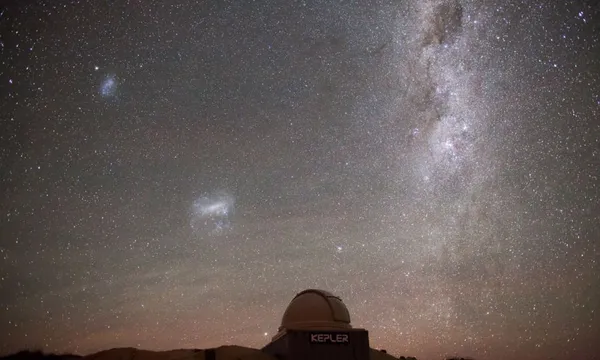
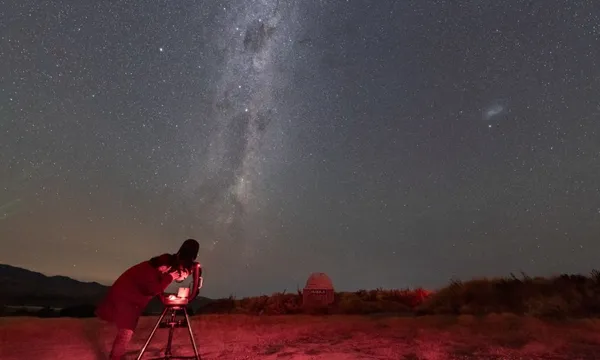
The Aoraki Mackenzie International Dark Sky Reserve was designated in 2012 and covers 4,367 square kilometres, taking in Lake Tekapo, Lake Pukaki, the Mackenzie Basin and Aoraki Mount Cook National Park. Mount John, on the western side of the lake, is home to New Zealand's main astronomical research observatory, and observatory visits such as the Crater Experience at Cowan's Observatory are the headline astronomy attractions in the village.
Timing matters for the sky. Peak stargazing is in winter, when the skies are at their clearest, and the moon changes what you see: during a full moon the fainter stars and the Milky Way are washed out.
Hot pools, farms and animals
The Tekapo Springs hot pools look over the lake from 720m above sea level, so a soak suits a cold evening or a day when cloud covers the peaks.
Farm-based attractions draw on the Mackenzie's sheep-country heritage, from Merino shearing and sheepdog demonstrations on a working high-country station to petting zoos where visitors feed the animals. Families can add a petting zoo, with animal encounters near Tekapo centred on feeding Merino sheep, alpacas and other farm animals.
Seasons and scenery
Russell lupins flower along the lake shore from about mid-November to the end of December. Winter brings snow to the surrounding peaks, and the Roundhill Ski Area is about 24 kilometres from the township.
Drivers are warned that stopping on State Highway 8 to look at the lupins can be unsafe, so pull off only where there is room.
Getting to Tekapo and planning around the weather
Tekapo is a 3-hour drive from Christchurch and from Queenstown Airport, about an hour from Ōmarama and about an hour and a quarter from Aoraki Mount Cook. That makes the village an easy overnight between Christchurch and Queenstown.
When cloud or wind spoils the outdoors, rainy day things to do in Tekapo start with the indoor Dark Sky Experience and the hot pools, and things to do in Tekapo with kids start with the same pools and the petting zoo. For time in the air or on a guided outing, flights from Tekapo and Tekapo tours are the natural next steps.
Frequently asked questions
What are the main attractions in Tekapo?
The main attractions in Tekapo are Lake Tekapo's turquoise water, the Church of the Good Shepherd, the Aoraki Mackenzie International Dark Sky Reserve and the Tekapo Springs hot pools. Mount John and its observatory, and farm visits on Mackenzie high-country stations, round out the list.
Is Lake Tekapo worth visiting?
Lake Tekapo is worth visiting for its turquoise lake, its place inside a Dark Sky Reserve and its mountain views. The village also works as an overnight between Christchurch and Queenstown, a 3-hour drive from each.
Why is Lake Tekapo turquoise?
Lake Tekapo is turquoise because Southern Alps meltwater carries glacial silt into the lake. The silt gives the water its pale turquoise colour.
How far is Tekapo from Christchurch?
Tekapo is about a 3-hour drive from Christchurch. Queenstown Airport is also a 3-hour drive away, and Aoraki Mount Cook is about an hour and a quarter from the village.
When do the lupins bloom at Lake Tekapo?
The Russell lupins at Lake Tekapo bloom from about mid-November to the end of December. Pull off the road at a safe spot rather than stopping on State Highway 8.
What can you do in Tekapo when it rains?
When it rains in Tekapo, indoor choices include the all-weather Dark Sky Experience at the Dark Sky Project base and a soak in the Tekapo Springs hot pools. Stargazing depends on clear skies, so wet-weather days suit these better.
What is the Aoraki Mackenzie International Dark Sky Reserve?
The Aoraki Mackenzie International Dark Sky Reserve is a protected area of night sky designated in 2012 by the International Dark-Sky Association. It covers 4,367 square kilometres of the Mackenzie Basin, including Lake Tekapo and Aoraki Mount Cook National Park.
Tekapo's attractions suit a short stay: take in the lake and the church by day, then keep the evening free for the sky.

We acknowledge and pay respect to the Traditional Custodians of Country and their connections and continuous care for the skies, lands and waterways throughout Australia.